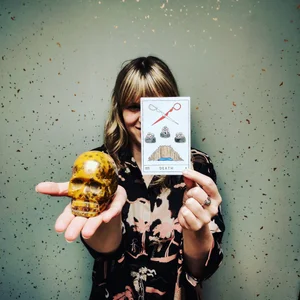
The strange story of one of Denmark's most enduring urban legends - exploring the folklore, fear and fascination behind “The Spirit in the Glass” tradition.
Ånden i Glasset has been many things to many people. A harmless party game. A way to communicate with the dead. A childhood dare. A source of fear, fascination and countless urban legends.
But where did this uniquely Danish tradition come from?
In this blog post, we'll trace its history from nineteenth-century Spiritualism and Victorian séances to Danish schoolyards, the Satanic Panic of the 1980s and the folklore that continues to surround it today.
DISCLAIMER: I'm not a historian, and this isn't an academic publication. It's the result of desk research into historical sources, newspaper archives, folklore, oral tradition and personal experience and childhood memories. While I've aimed to distinguish documented history from folklore and later urban legends, some questions remain unanswered. Where certainty ends, curiosity begins.
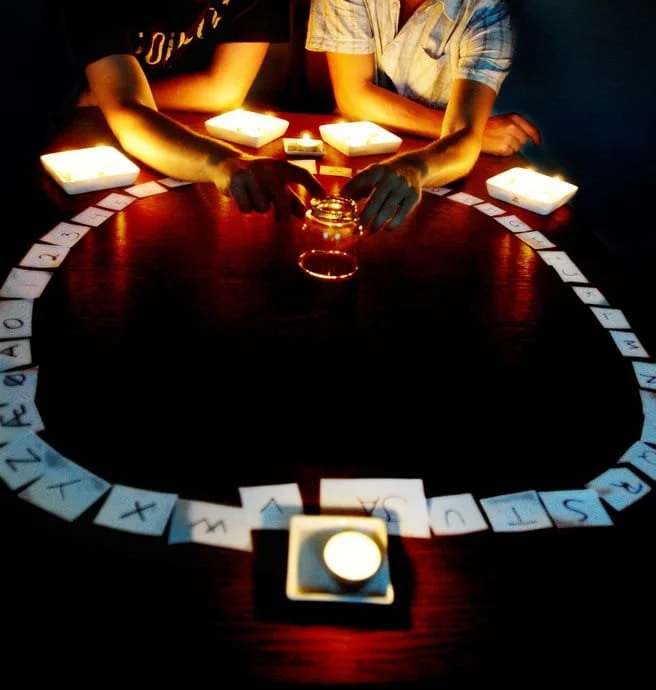
Classic Ånden i glasset set-up (photo credit: ghosthunting.dk)
What is “Ånden i glasset”?
If you grew up in Denmark during the 1980s or 1990s like me, there's a good chance you encountered “Ånden i Glasset”. Perhaps at a sleepover, a summer camp or in a friend's basement. An ordinary drinking glass, a handwritten alphabet and a lit candle were often all it took to transform an evening into something both thrilling and scary AF.
"Børnenes farlige leg med ånderne."
(“The children's dangerous game with the spirits”)
Berlingske Tidende, 5 April 1987
For many Danes, Ånden i Glasset became far more than a simple party game. It evolved into one of Denmark's best-known urban legends, passed from child to child through whispered stories, warnings and rumours. Tales of trapped spirits, haunted houses, demons and mysterious encounters circulated in schoolyards long before the internet made such stories travel instantly.
At the same time, the phenomenon attracted serious attention. During the late 1980s, newspapers, psychologists and Christian organisations warned against the game and even connecting the game to satanism, helping to turn Ånden i Glasset into a nationwide talking point and a true urban legend.
"Børn fanget i Satan-dille."
(“Children caught in a Satan craze”)
Ekstra Bladet, 21 March 1987
Despite its place in Danish popular culture, surprisingly little has been written about the tradition itself. Most people know how to play, but few know where it came from, how it differs from the Ouija board, or how a homemade circle of letters and an upside-down drinking glass became one of Denmark's most enduring supernatural traditions.
This article explores the history of Ånden i Glasset through historical sources, newspaper archives, folklore and personal memories growing up in Denmark in the 1980s and 1990s. Rather than asking whether it works, we'll explore how one of Denmark's most fascinating urban legends came to life.
Before Ånden i glasset
Long before people gathered around an upside-down drinking glass, they had searched for ways to communicate with the unseen and the dead.
Across cultures and throughout history, people have sought answers from spirits, gods, ancestors and the unknown. Ancient forms of divination included casting lots, reading the stars, interpreting dreams and consulting oracles. During the Middle Ages and the Renaissance, ceremonial magic, necromancy and spirit conjuration became part of European occult traditions.
By the nineteenth century, this fascination had taken on a new form. Rather than summoning spirits through elaborate rituals, ordinary people began gathering around dining tables in parlours and living rooms, hoping to make contact with the dead.
This movement became known as Spiritualism and it would eventually give rise to the tradition we know today as Ånden i Glasset.
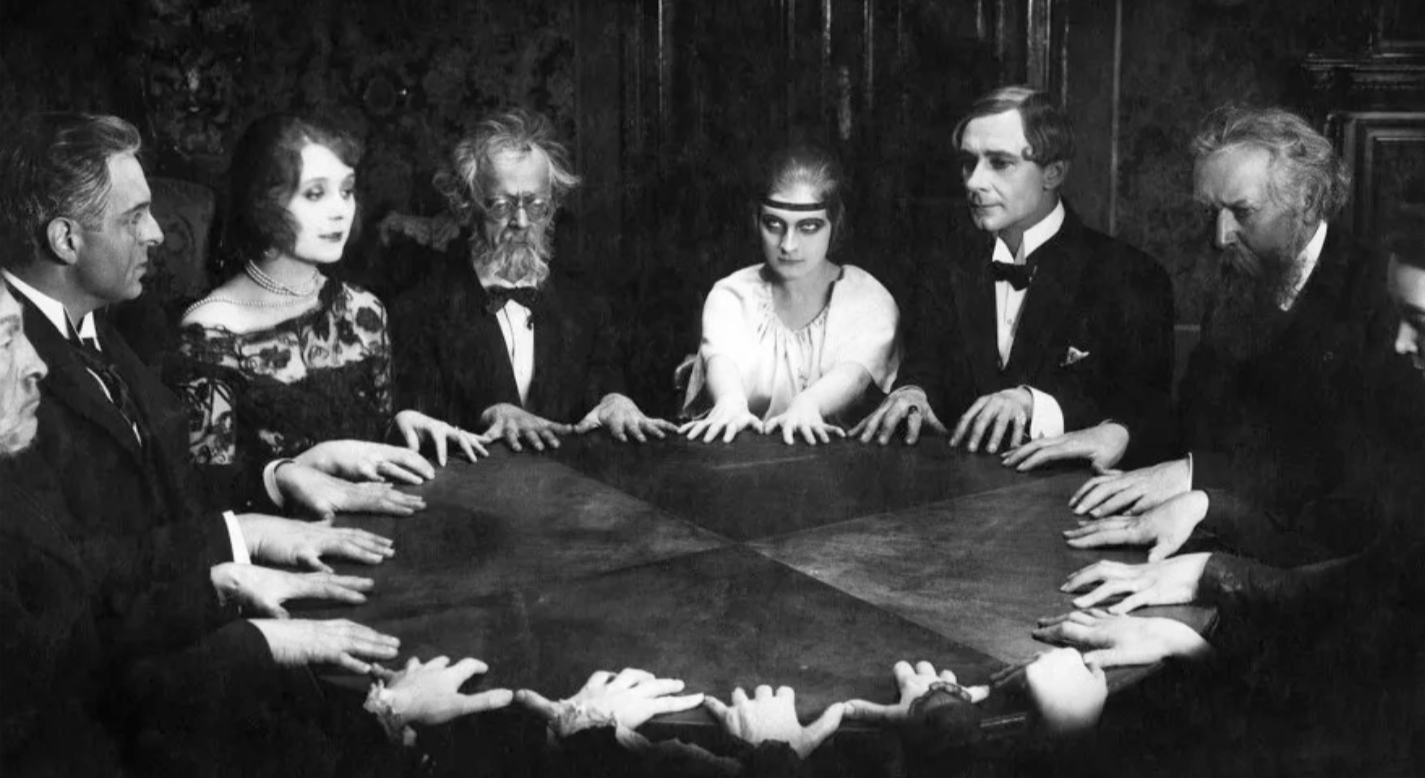
A Seance scene in the classic German silent film Dr Mabuse (1922), directed by Fritz Lang. (Photo credit: Bettmann/Corbis)
The Spiritualist Revolution
Although people had attempted to communicate with the dead for centuries, the movement we now know as Modern Spiritualism began in the United States in 1848.
According to the famous story, two young sisters, Margaret and Kate Fox, began hearing mysterious knocking sounds in their family home in Hydesville, New York. Believing the noises came from the spirit of a murdered travelling salesman, they started asking questions, interpreting the knocks as coded responses. Soon, neighbours gathered to witness the strange phenomenon for themselves, and word spread rapidly beyond the small village.
Newspapers picked up the story, public demonstrations followed, and within just a few years thousands of people across the United States and Europe were attempting to communicate with the dead. Séances became fashionable, mediums gained celebrity status, and Spiritualist societies began forming throughout the Western world. What had once been the domain of occultists and ceremonial magicians had suddenly become something ordinary families could experience in their own homes.
Like any good ghost story, however, the tale of the Fox sisters comes with an unexpected twist.
Like any good ghost story, however, the tale of the Fox sisters comes with an unexpected twist. Decades later, the sisters publicly confessed that the mysterious knocks had been produced by cracking their toe joints. The confession made headlines around the world... only for them to later retract it, claiming they had been pressured into denouncing their own experiences.
Whether the sisters were gifted mediums, talented performers or something in between is still debated. What cannot be disputed is their influence. Their story ignited a movement that would shape Western ideas about spirit communication for generations.
Table-turning, automatic writing, spirit photography, trance mediums and talking boards all became familiar features of Victorian fascination with the unseen.
As Spiritualism spread throughout Europe during the second half of the nineteenth century, new methods of contacting the spirit world flourished. Table-turning, automatic writing, spirit photography, trance mediums and talking boards all became familiar features of Victorian fascination with the unseen.
It was from this cultural landscape that the Ouija board emerged in the United States during the 1890s. Building on existing Spiritualist practices, it became the first commercially successful talking board, combining a printed alphabet with a movable planchette.
At roughly the same time, a different tradition began to emerge in Denmark. Using nothing more than handwritten letters, numbers and an ordinary glass, people developed what would eventually become known as Ånden i Glasset.
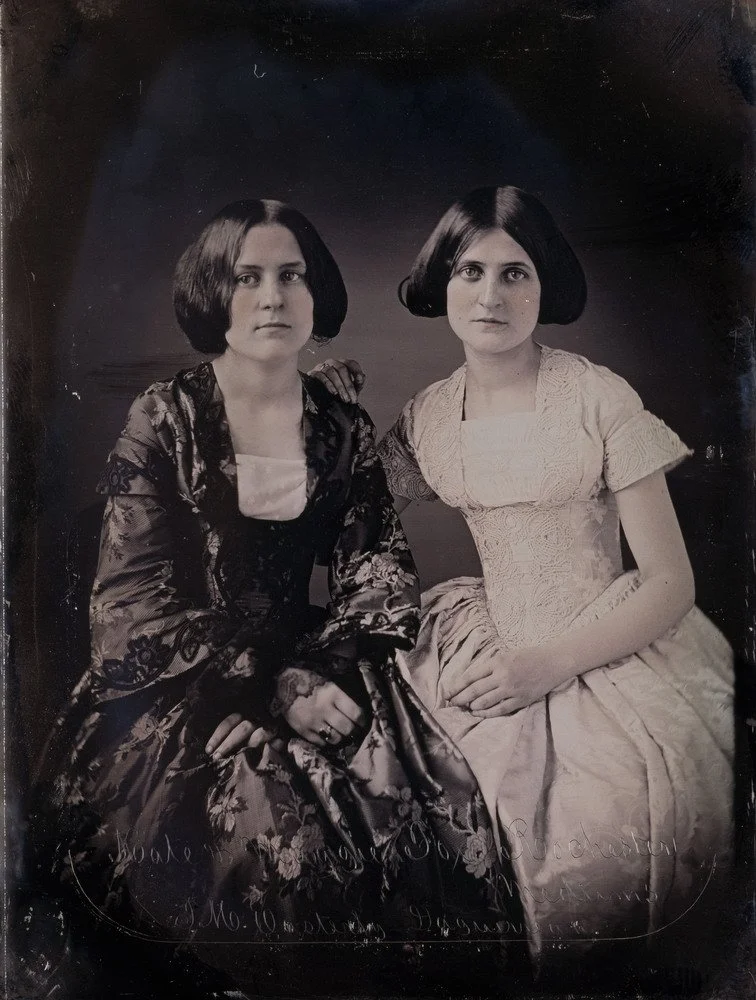
The Fox Sisters - Margaret and Kate Fox (Photo credit: https://blogs.lshtm.ac.uk/library)
The Danish Tradition
Unlike the Ouija board, Ånden i Glasset was never a commercial product. There was no official board, no manufacturer and no instruction manual. Instead, it lived through tradition and the power of word-of-mouth.
Across Denmark, children and teenagers created their own versions using whatever they had at hand. The alphabet was written on a sheet of paper or a piece of cardboard, a drinking glass was turned upside down, and a candle often completed the set up. Every group seemed to have its own unwritten rules, passed from friend to friend rather than from books.
"Rædslen, frygten og angsten lyser ud af dem."
("The terror, fear and anxiety written all over them")
Steen Skovsgaard, Parish Priest.
This is one of the reasons why the history of Ånden i Glasset is so difficult to document. Unlike commercially produced spirit boards, the Danish tradition left very few physical traces. Most of what we know comes from newspaper articles, interviews (often from religious sources warning against the game), a few mentionings in books on folklore and the memories of the people who played it.
Although the basic idea remained the same, the ritual varies. Some warmed the glass over a candle before the séance began. Others breathed into the glass, left a window open or insisted that the séance could only end by moving the glass to "Farvel." Over time, these customs became part of the folklore surrounding Ånden i Glasset, and it is often impossible to say where documented tradition ends and urban legend begins.
Perhaps that is exactly why the tradition has endured. Because it was never fixed, every generation added something of its own.
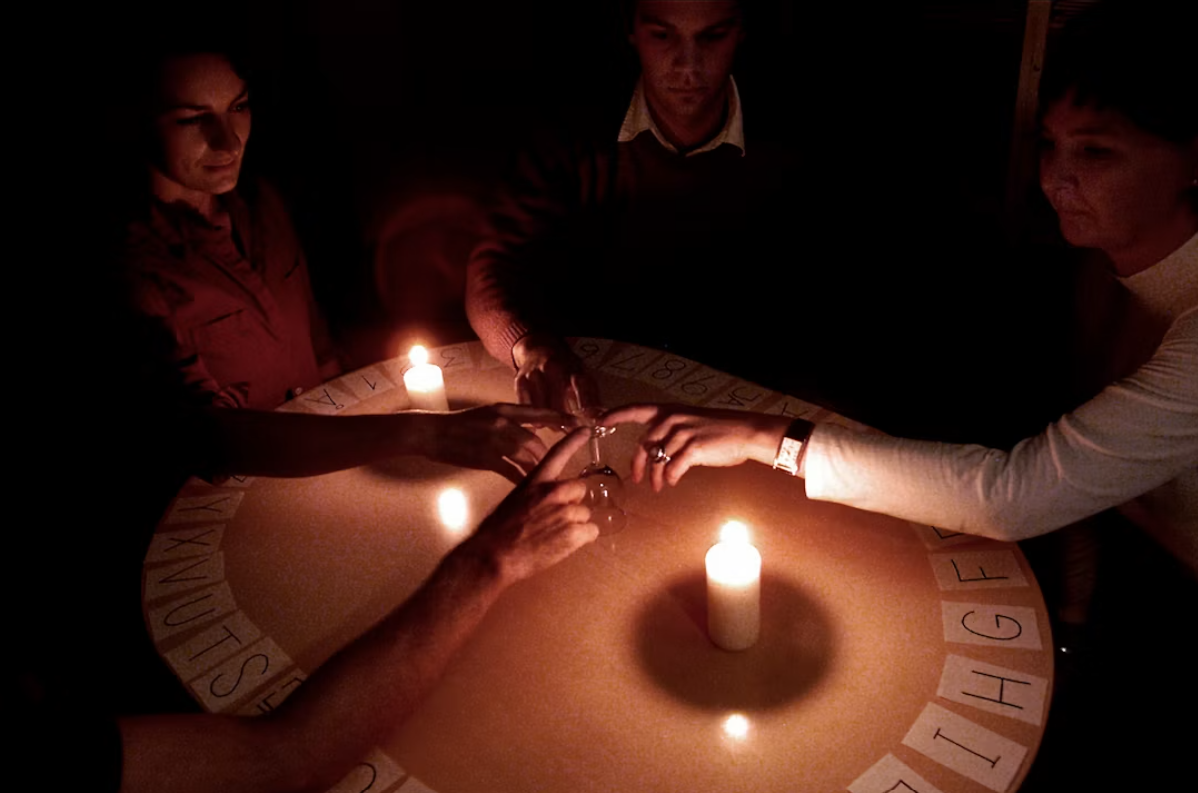
Classic Ånden i glasset session (Image credit: Jørgen Jessen, Ritzau Scanpix)
Rituals, Rules & Urban Legends
One of the most fascinating aspects of Ånden i Glasset is that no two people seem to remember it in exactly the same way.
Ask ten Danes how they played it, and you'll probably hear ten slightly different versions. Some traditions were shared by thousands of people across the country, while others appear to have been unique to a single family, school or group of friends.
Unlike the Ouija board, there has never been an official rulebook. Instead, the tradition evolved through word of mouth. Children learned it from older siblings. Friends taught friends. Every generation added, removed or reinvented parts of the ritual.
Some customs appear again and again in newspaper articles, books and personal accounts. Others are almost certainly later additions, inspired by horror films, ghost stories or the internet.
Below are some of the most common traditions associated with Ånden i Glasset.
Commonly documented traditions:
An upside-down drinking glass
A handwritten alphabet
A candle
Beginning by asking whether a spirit is present
Ending the séance by moving the glass to "Farvel"
Traditions that appear in many personal accounts:
Warming the glass over a candle.
Trapping smoke inside the glass before beginning.
Breathing into the glass.
Leaving a window open so the spirit could leave.
Playing at midnight.
Holding the séance in an attic, basement, abandoned building or a cemetery after hours.
Modern folklore and urban legends
Some practices are now so widespread that many people assume they have always been part of the tradition. Placing silver objects in the corners, surrounding the circle with crystals or casting a protective circle are good examples. While these may be meaningful personal rituals, there is little evidence that they formed part of the traditional Danish practice before the late twentieth century.
But this is the nature of folklore. Stories evolve. Rituals change. Every generation leaves its mark.
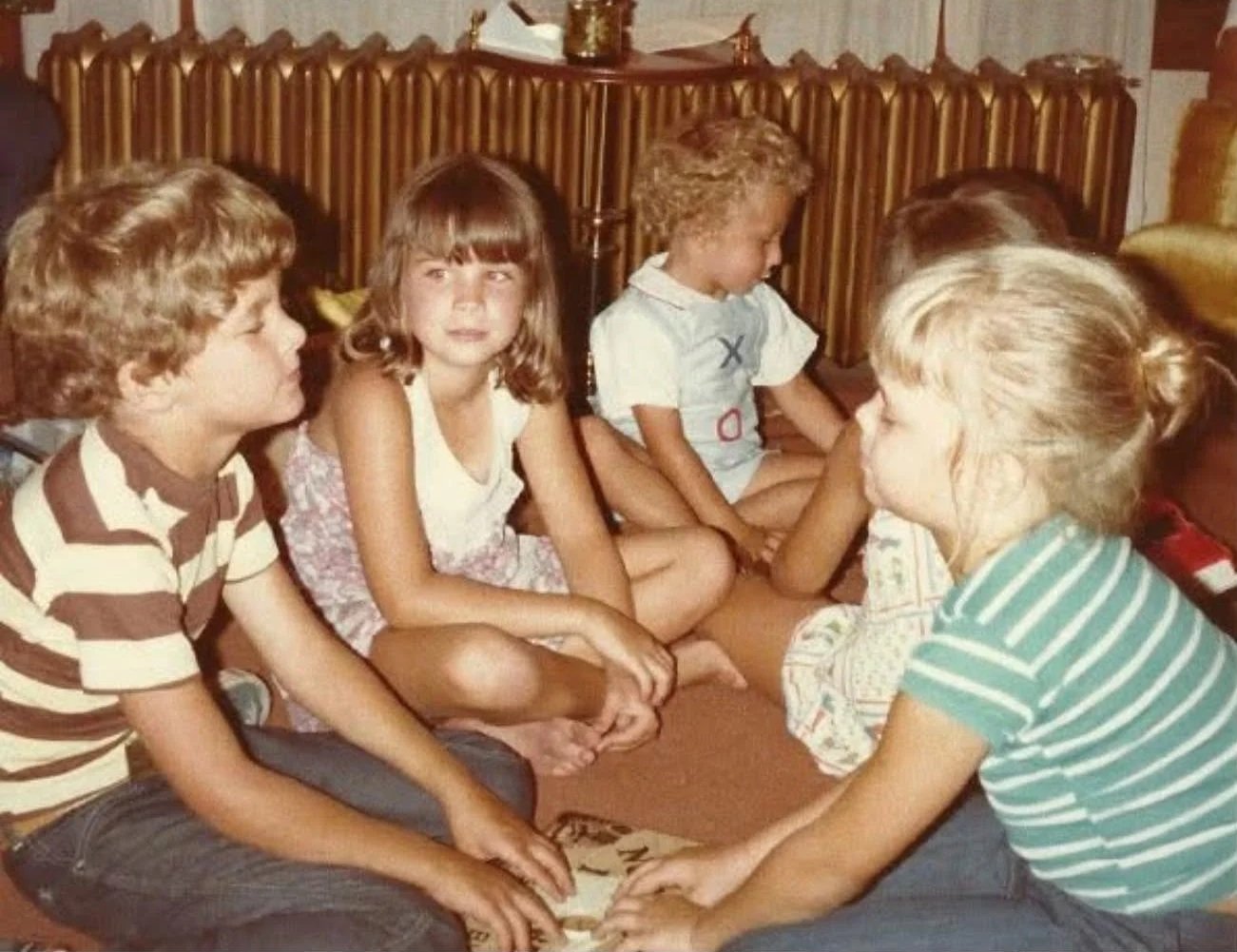
“1977. A fun night with my sisters and cousins summoning demons with this new fun game called Ouija.” (Photo credit: Möllöy Blanton)
The Satanic Panic
By the mid-1980s, Ånden i Glasset had become a familiar pastime among Danish children and teenagers. What had once been whispered about in schoolyards was now attracting the attention of parents, teachers, psychologists, journalists and various Christian organisations .
In 1987, a wave of newspaper articles warned about the dangers of communicating with spirits. Headlines linked Ånden i Glasset to Satanism, psychological harm and even suicide. Christian organisations described it as a dangerous form of spiritism, while psychologists warned that frightened children could mistake imagination for reality.
As the media coverage intensified, so did the rumours.
"Åndemaneri lokkede min datter til selvmord."
(“Spirit Obsession Lured My Daughter to Suicide”)
Søndags B.T., 1987.
Stories spread of children who had become possessed, families haunted by evil spirits and séances that had ended in tragedy. Many of these stories cannot be traced to a reliable source, yet they circulated widely and became part of Denmark's growing collection of urban legends.
For many children (myself included) growing up in the late 1980s and early 1990s, these warnings only made Ånden i Glasset even more fascinating. The mystery grew, and with it came an endless stream of whispered stories beginning with, "My friend's cousin..." or "Someone at another school..."
In retrospective, the events of 1987 can be seen as part of the wider "Satanic Panic" that swept through North America and parts of Europe during the 1980s. Denmark experienced its own, smaller version, with Ånden i Glasset unexpectedly finding itself at the centre of the debate.
Whether the warnings were justified or not, they helped cement Ånden i Glasset as far more than a simple party game. It became part of Danish popular culture.
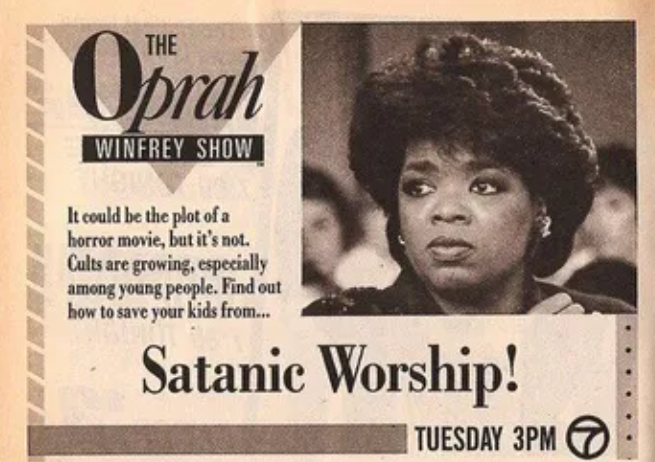
Satanic Panic in The Oprah Winfrey Show 1986 (photo credit: https://tvtropes.org/)
Why Does the Glass Move?
For well over a century, people have debated what causes the glass to move during a séance. While no single explanation satisfies everyone, two perspectives have remained remarkably consistent.
The first is the spiritual interpretation. Many people believe the glass is guided by spirits, the deceased or another unseen intelligence. Throughout history, countless participants have described experiences they felt could not be explained by coincidence alone.
The second is the psychological explanation, known as the ideomotor effect also known as “The Carpenter Effect” or “The Law of Reflexes”. This theory suggests that the participants themselves move the glass through tiny, unconscious muscle movements. Because these movements happen without conscious awareness, everyone around the table may genuinely feel that no one is pushing.
The ideomotor effect has been demonstrated in numerous psychological experiments and is widely accepted as the scientific explanation for Ouija boards, pendulums, dowsing rods and similar forms of divination.
Whether the answers come from spirits, the unconscious mind or the shared expectations of the participants, the experience often feels meaningful to those taking part.
For many people, however, the psychological explanation does not diminish the experience. Whether the answers come from spirits, the unconscious mind or the shared expectations of the participants, the experience often feels meaningful to those taking part.
Perhaps that is why Ånden i Glasset has survived for generations. The mystery has never been fully resolved, leaving each new generation free to reach its own conclusion.
Traditions Across Europe
Although Ånden i Glasset is closely associated with Denmark, it is far from the only European tradition of spirit communication using everyday objects. During the late nineteenth and early twentieth centuries, similar practices appeared across much of Europe. Some developed alongside the Spiritualist movement, while others evolved independently through local folklore and popular culture.
What makes the Danish tradition special is not that it stands alone, but that it survived for generations as a homemade ritual rather than a commercial product.
Sweden
Sweden has a tradition known as Anden i glaset ("The Spirit in the Glass"), which closely resembles the Danish version. Participants use an upside-down drinking glass placed on letters and numbers, often accompanied by candlelight and many of the same unwritten rules found in Denmark.
Norway
Norway also has its own versions of spirit communication with a glass, although the tradition appears to have been less widespread than in Denmark and Sweden. Norwegian accounts often resemble a mixture of the Danish glass tradition and the commercially available Ouija board, suggesting that both influences existed side by side.
Germany
One of the closest European relatives to Ånden i Glasset is the German tradition known as Gläserrücken, literally meaning "glass pushing."
The practice became popular during the late nineteenth century and involved an inverted glass moving across letters or symbols while participants rested their fingertips lightly on the glass. Today, many historians consider Gläserrücken and Ånden i Glasset to be parallel traditions that developed within the wider European fascination with Spiritualism.
France
France played a different but equally important role in the history of spirit communication. During the nineteenth century, educator Allan Kardec transformed Spiritualism into the philosophy of Spiritism, publishing books that would influence generations of believers around the world.
While France is not known for a tradition identical to Ånden i Glasset, Spiritism helped shape the wider European interest in séances, mediums and communication with the dead.
Britain and the United States
Victorian Britain embraced table-turning, automatic writing and planchettes, while the United States became the birthplace of the commercially produced Ouija board in the 1890s.
Unlike Ånden i Glasset, the Ouija board was designed as a manufactured product with a standard layout, a planchette and printed instructions. It was sold in toy shops and department stores and eventually became one of the world's most recognisable spirit communication devices.
A Shared Fascination
Although these traditions differ in their rituals and history, they all reflect the same enduring human curiosity: the desire to communicate with something beyond ourselves.
Whether that "something" is understood as spirits, the unconscious mind or simply the imagination has been debated for more than a century.
"Bag åndelegen ligger et eller andet åndeligt behov."
("Behind the spirit game lies some kind of spiritual need.")
Johannes Aagaard, Professor of Missiology.
Denmark's contribution to this story is refreshingly simple. No patented board. No official rulebook. Just an ordinary drinking glass, a handwritten alphabet and generations of stories passed from one curious child to the next.
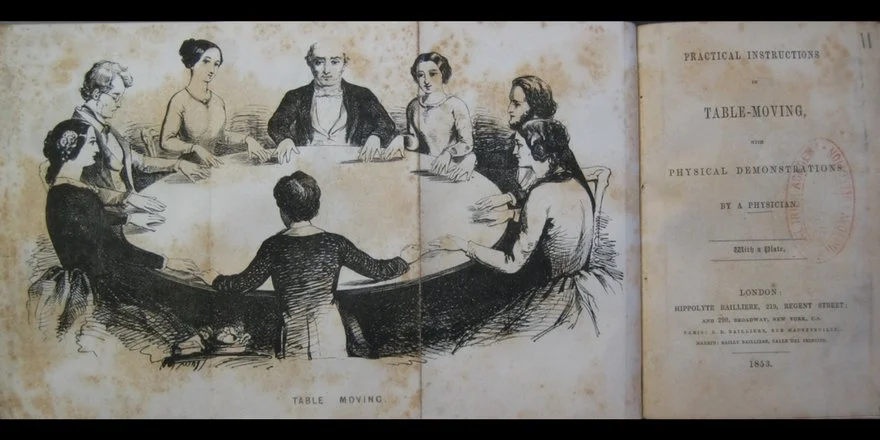
Practical instructions in table-moving (Illustration credit: frontispiece (HP 2139/11))
Bringing a Tradition Back to Life
Like many Danes of my generation, I first encountered Ånden i Glasset as a child. It wasn't something I learned from a book or bought in a shop. It was something passed from friend to friend, accompanied by whispered stories, rumours and just enough fear to make it irresistible.
Many years later, I became curious about where the tradition came from. The more I researched, the more I realised how little had been written about this uniquely Danish phenomenon. There were countless articles about the Ouija board, but not much about Ånden i Glasset itself (I found mostly warnings on Christian blogs).
"Mit indtrængende råd er: Lad det være! For alt i verden!"
("My earnest advice is this: Leave it alone! Whatever you do!")
Leif Andersen, Professor of Practical Theology.
This project began as an attempt to preserve a small piece of Danish cultural history, and perhaps a nervewrecking but fun part from my own childhood lore too.
Rather than recreating a historical board, I wanted to create something that felt as though it could have existed during the great age of Spiritualism in the late nineteenth century. The design draws inspiration from Victorian séance aesthetics while remaining unmistakably Danish.
Each edition is assembled by hand. Every séance cloth is unique, and every glass and candle holder is an antique discovered at flea markets across Denmark. No two sets are exactly alike.
Only thirteen sets have been created.
Whether you see the Ånden i Glasset set as a design object, a conversation piece, a historical curiosity, a ritual tool or simply an excuse to gather around a table by candlelight is entirely up to you.
Whatever you believe, I hope it inspires curiosity…
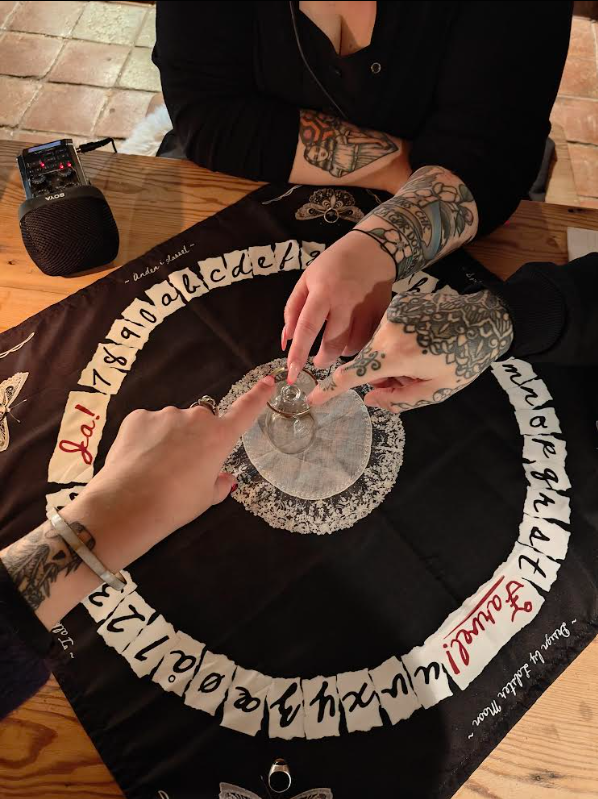
From Ånden i Glasset séance in Daldorphs hus / Køge Museum with Fårking Uhyggeligt podcast using Lobster Moon’s Ånden i Glasset Limited Edition set (Photo credit: Mariia Snebjørk Damkjær / Lobster Moon)