Børsen and the 400 Year Spell…
What if the fire at Børsen wasn’t just an accident, but an ending. In the early 1600s, magic was believed in strongly enough to be punished, which makes it difficult to imagine it wasn’t also used. And then there is the number four, appearing again and again around Børsen.
I have this theory, and I realise it’s not something I can prove in any real sense, nor is that really the point, and it might annoy some people, but it came to me in the days right after Børsen burned in April 2024 and has stayed with me ever since, not dramatically, but more like a quiet recognition that settled in and never really left, something about the pattern of it, the repetition of the number four, and the thought itself is quite simple, which is perhaps also why it hasn’t gone away.
I keep thinking that Børsen might have been protected by something… magical?? Not symbolically or metaphorically, but in the way protection would have been understood in the early 1600s, when the building was first constructed, and that whatever that protection was, it was never meant to last indefinitely, but rather for a fixed span of time, something defined, something set.
Exactly four hundred years.
DISCLAIMER: I’m not a historian, and this isn’t an academic text. It’s a personal reading of history shaped by research, pattern recognition, and intuition. Some parts are grounded in documented facts, others move more freely in interpretation. Read it as a perspective, not a conclusion.
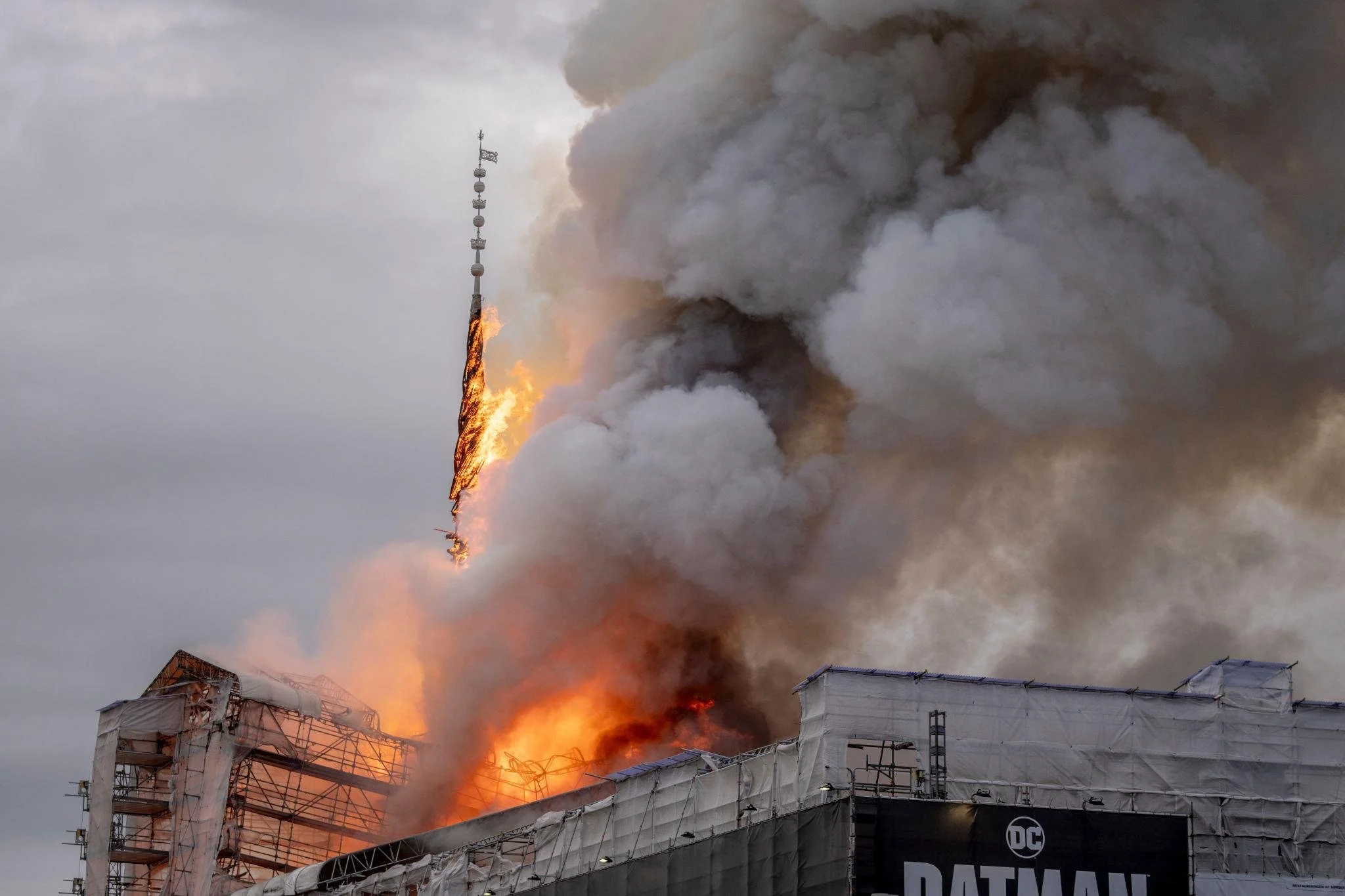
Børsen on fire April 16th 2024 (photo credit: DR)
What is Børsen?
For anyone not from Copenhagen or Denmark, Børsen was the old stock exchange, commissioned by King Christian IV and completed in 1624, placed right in the centre of the city where it functioned for centuries as a hub for trade and the circulation of wealth, and over time it became one of those buildings that simply folds into the identity of a place, something that feels permanent not because anyone says it is, but because it has always been there.
It was also a very particular building, especially because of its spire, formed by four dragon tails twisted together into one, and once you notice that, it becomes difficult to unsee the repetition of four, because when the building burned, what disappeared was not just a structure, but something that had stood there, more or less unchanged, for exactly four hundred years, from 1624 to 2024, and that kind of symmetry is hard to ignore once you’ve seen it.
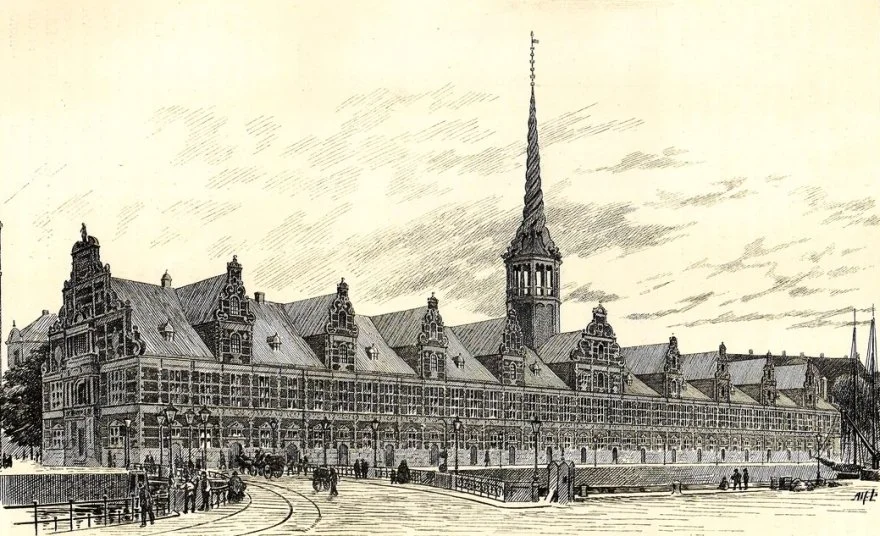
Børsen as it looked (more or less) for 400 years (Image credit: www.hovedstadshistorie.dk)
King Christian the 4th
When you look at Christian IV, it becomes difficult, at least for me, to think of his buildings as purely functional, not because there needs to be some hidden master plan behind them, but because of the world he lived in, and even his name carries the number, IV, four, which starts to feel almost too aligned when placed next to everything else, and when you consider that he built Rosenborg, Rundetårn, and Børsen, very different kinds of buildings that still stand today, and that Rundetårn in particular was built as an observatory connected to the sky, to astronomy and astrology, which at the time were not clearly separated, it becomes easier to place Børsen within a reality where knowledge, power, building, and the unseen were not divided in the way we tend to separate them now.
“…Christian the 4th both consulted astrology and paid attention to timing and signs while at the same time actively approving, endorsing and legitimising the persecution of those accused of witchcraft…”
And all of this unfolded within a worldview where magic was not abstract, but something understood as real and active, something that could influence events, bodies, and outcomes, and Christian IV both consulted astrology and paid attention to timing and signs while at the same time actively approving, endorsing and legitimising the persecution of those accused of witchcraft, not as some distant or abstract phenomenon, but as something that unfolded physically within the same city, where at Københavns Slot (Copenhagen Castle), just meters from where Børsen stands, women were imprisoned, interrogated, subjected to violence and finally executed (mostly likely burned at the stake, as this was the most used method in Denmark) under suspicion of witchcraft (Copenhagen Castle itself burned down in 1794, and today Christiansborg Palace stands on the site), which makes it difficult to maintain any clean separation between belief and action, because magic was not dismissed as unreal, it was believed in strongly enough to be controlled, regulated, and punished, and it mattered very much who was allowed to be associated with it and who was not.
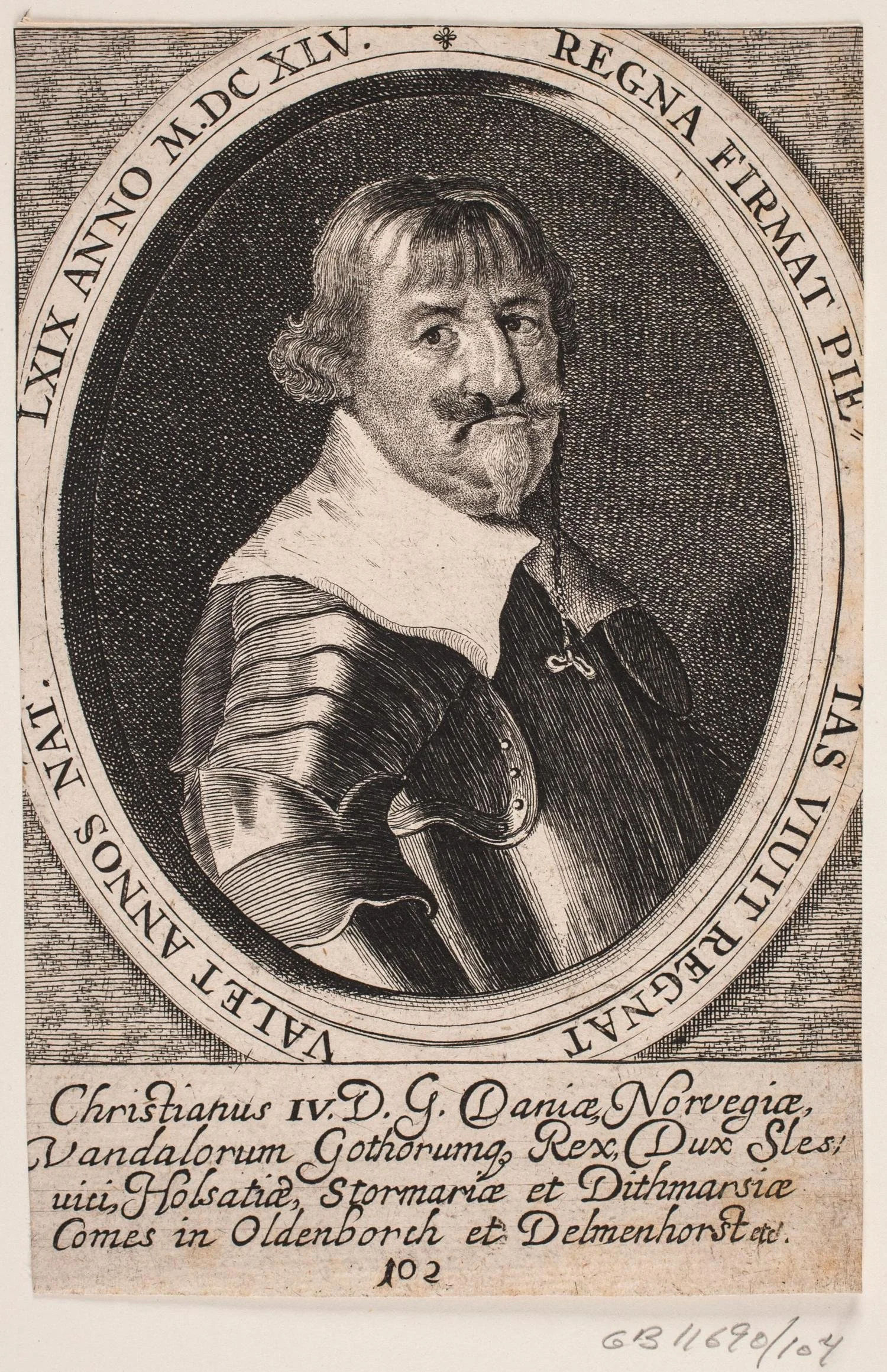
Christian the 4th (Credit: Illustration by Albert Haelwegh, 1646. Image from www.politikenhistorie.dk)
A Spell that was Never Meant to Last…
So if you place yourself within that mindset, it becomes less strange to imagine that something like Børsen would not only be constructed in physical terms, but also set into motion in a more subtle way, not necessarily through anything theatrical, but through timing, alignment, and intention, through choices that were understood to have weight, perhaps through someone who could work with those forces without being accused of them, a learned man, an alchemist, an astrologer, perhaps even a troldkarl (“man of sorcery”), basically someone whose work would not be named as magic, but would not be separate from it either.
“…but historically magical workings were often bound to objects, places, people or structures, anchored in cycles of time, and designed with limits…”
Here is where the theory deepens a bit for me, because modern (none witchy) people tend to imagine spells as either instant, which is mostly Hollywood nonsense, or eternal, which is somehow even less convincing, but historically magical workings were often bound to objects, places, people or structures, anchored in cycles of time, and designed with limits, because maintaining something forever is unrealistic, even magically, so if something was done when Børsen was built, I don’t imagine it as some endless forever protection, but more as a working meant to hold, protect, and stabilise for a defined duration… Like 400 years ex.
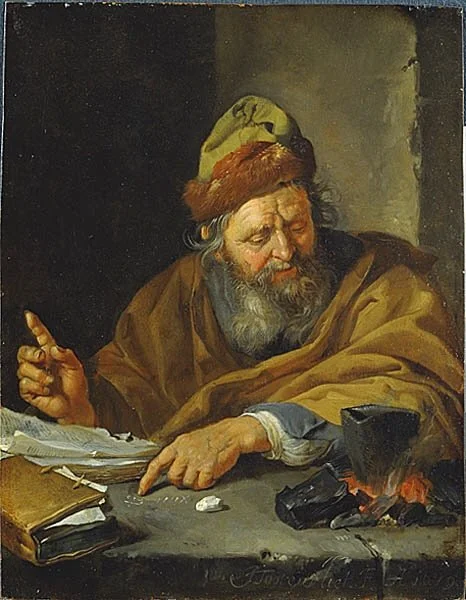
Could the “spell caster” have been someone who looked something like this? (Credit: Jacob Toorenvliet, An Alchemist, 1679, oil on copper, 22 x 17 cm, Nationalmuseum, Stockholm)
The Dragon Spire
And then there are the dragons, because the spire is not just decorative but formed by four dragon tails twisted together into one structure, and dragons, in the early modern imagination as much as in older traditions, were not neutral figures but associated with power, guardianship, and forces that moved between elements, often linked to both fire and hidden knowledge, appearing in alchemical imagery as creatures that both contain and transform, something that can hold and something that can destroy. And here they are not separate but intertwined, bound into a single form, which reads less like ornament and more like something that has been tied together on purpose, almost like a contained force rather than a symbol alone.
“…There is also the long-held idea that the dragons were meant to protect the building, even from fire…”
The spire itself is generally attributed to a master builder working in metal and fire, and the official explanation is that the dragon form was inspired by Chinese motifs brought to Europe through trade, which in itself is interesting given Børsen’s role as a centre of that same global exchange, but even within that explanation the choice of dragons carries a weight that is difficult to ignore, especially in a time where symbolic forms, proportions, and materials were often understood to hold meaning beyond the purely visual. There is also the long-held idea that the dragons were meant to protect the building, even from fire, which makes their collapse feel less like something simply failing and more like something that had reached its limit.
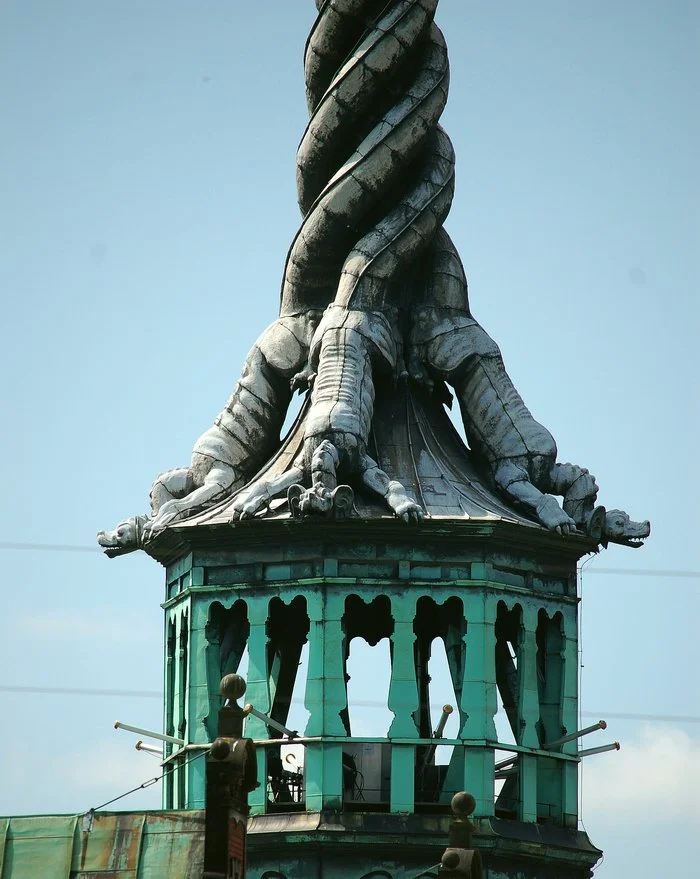
The dragon spire of Børsen (Photo credit: www.hovedstadshistorie.dk)
The Number Four
The number keeps returning in a way that becomes difficult to ignore, because in European esoteric and folk traditions four is deeply tied to the material world and to containment, there are four elements, four directions, four corners, four walls, four is what gives form and creates boundaries, what allows something to hold, and when you extend that into time, a hundred years becomes something like a full human cycle, something complete in itself, so four times one hundred becomes a full cycle of material stability, not eternal, but long enough that it begins to feel that way.
The Fire
And then it ends, from 1624 to 2024, and it ends in April, the fourth month, and it ends in fire, which is perhaps the part that feels the least accidental, because fire does not slowly wear something down but transforms it, releases it from the form it was held in, and in many magical and folk traditions it is the element used to break bindings, close workings, and render things irreversible, it consumes rather than negotiates, it purifies but also destroys, and it has long been used to mark endings that cannot be undone, whether in ritual, in law, or in punishment, so if something had been placed to hold for a certain span of time, then fire would be a very direct way of bringing that to an end, not by weakening it, but by completing it.
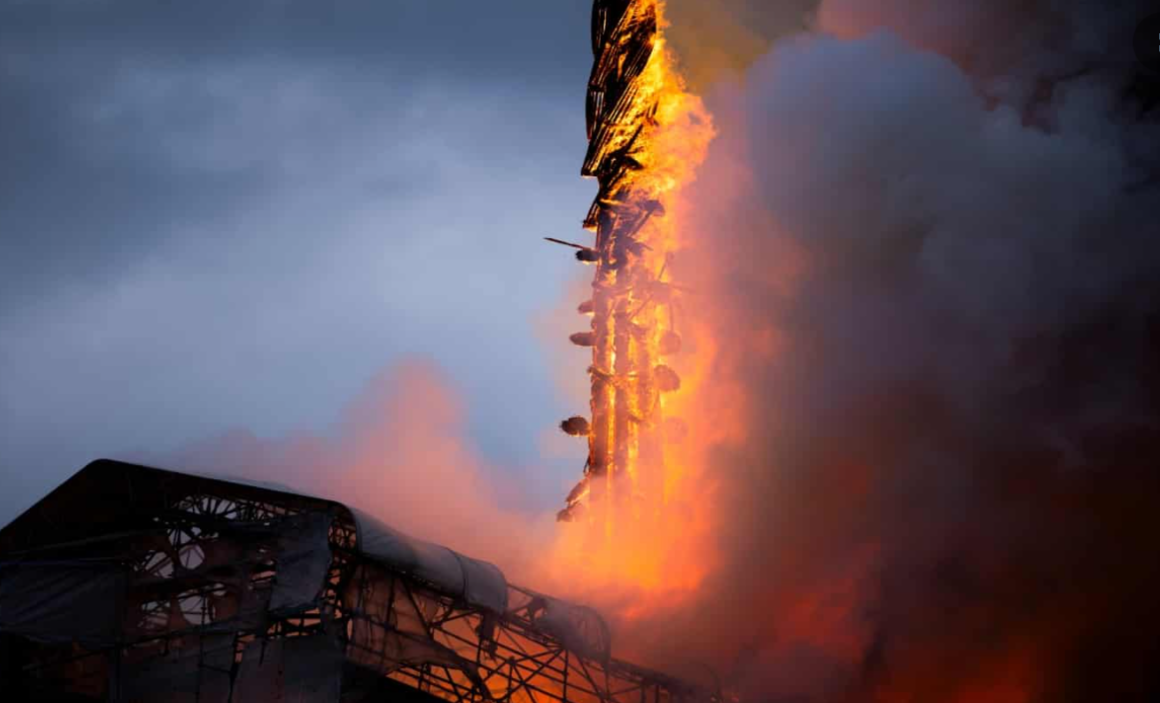
Børsen’s famous dragon spire right before the collaps (Photo credit: Anthon Unger/Scanpix)
The Brutal Origin of Børsen
It also doesn’t sit lightly, because what Børsen held was never neutral, as Denmark’s involvement in the Caribbean, through the Danish West India Company, tied Copenhagen directly into the transatlantic slave trade, where enslaved Africans were transported across the ocean under violent and inhumane conditions, sold as property, separated from families, and forced into brutal labour on plantations on St. Thomas, St. John, and St. Croix, where many did not survive and those who did lived under constant coercion and control, producing wealth that did not remain where it was created but moved through ships, accounts, institutions, and buildings, and through Børsen itself.
“…tied Copenhagen directly into the transatlantic slave trade, where enslaved Africans were transported across the ocean under violent and inhumane conditions…”
So for me the thought remains quite simple, which is that if something was set in place when Børsen was built, whether through timing, intention, or something more deliberate, then it may never have been meant to last forever, but to last exactly as long as it did, four hundred years, and that when that time was up, it ended, not quietly, but all at once.
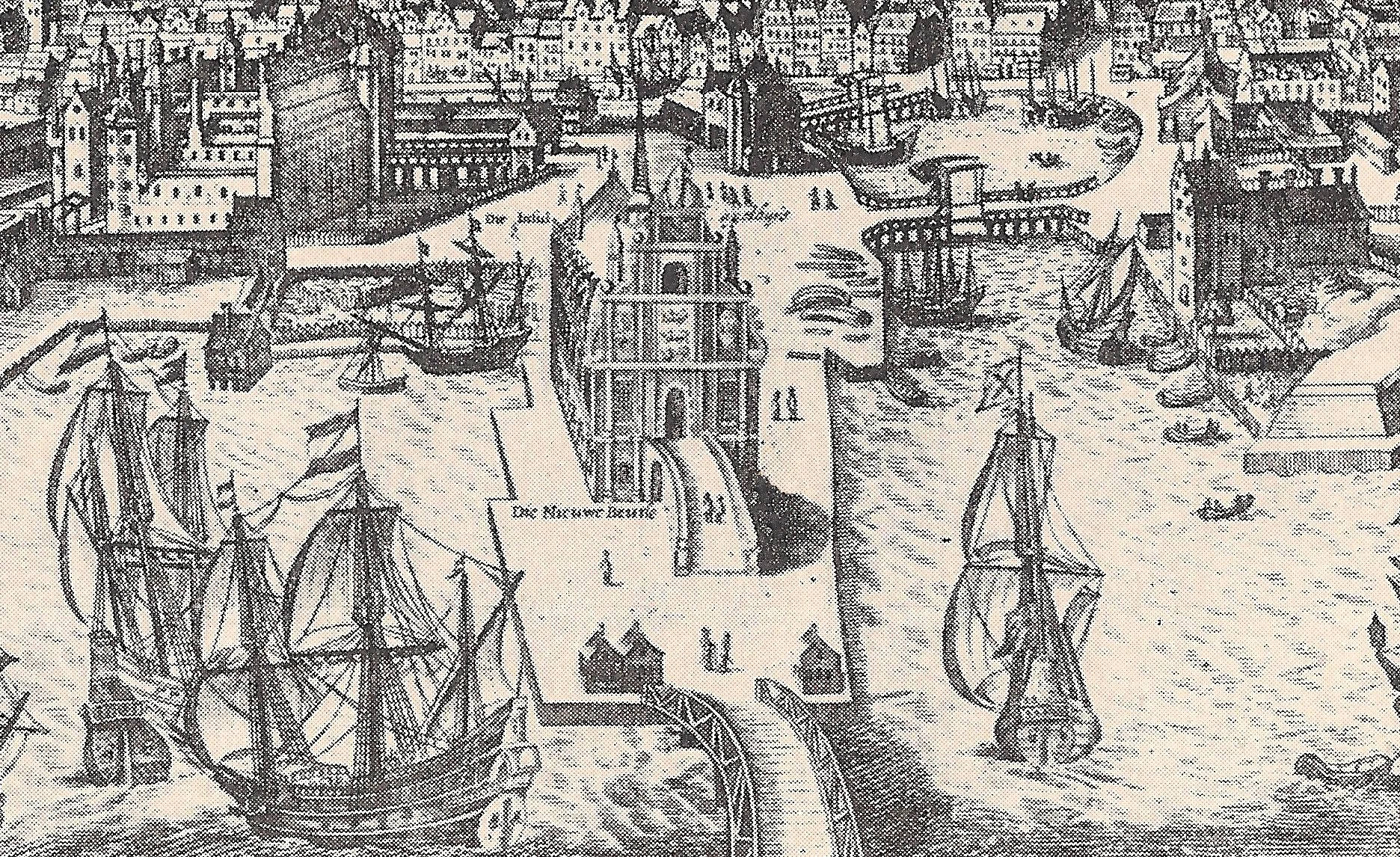
(Photo credit: www.hovedstadshistorie.dk)
Afterthought…
Since the fire, Børsen is already being rebuilt, and I keep circling back to that with a certain discomfort, not because rebuilding in itself is strange, but because of how quickly the decision seems to have settled into something unquestioned, almost automatic, as though the only imaginable response to loss is replication.
The stated ambition is that it should stand again for centuries, sometimes even spoken about in terms of another four hundred years, which is difficult not to notice when placed next to the timing of the fire itself.
And I find myself wondering what exactly is being restored, because Børsen was never just a building, and it was never neutral, it was part of a system that organised trade, wealth, and movement, deeply entangled with colonial expansion, with the transatlantic slave trade, with the forced labour of enslaved people, while in the same city women were imprisoned and punished for practices that were, in other contexts, part of how the world was understood.
All of this existed at once.
So to rebuild Børsen exactly as it was, without allowing any of that to visibly enter the structure, begins to feel less like preservation and more like a kind of careful forgetting.
Because why not acknowledge it? Seriously why?
It could have been a new structure on the same ground, one that acknowledged the enslaved people whose labour fed the systems that enriched Denmark and Europe, and the violence and extraction that made that wealth possible, not as something hidden away in a text or reduced to a symbolic gesture, but as part of the architecture itself, something built into the form, the materials, the narrative of the space, a building that did not pretend innocence, that did not separate itself from what made it possible, but instead held that knowledge openly, a building that knew what it stood on, and allowed that to remain visible, not just as history, but as something that continues to shape the present, for future generations to learn.
Instead, the building is being rebuilt in the same shape.
And it leaves me wondering whether it is really the building being restored, or if the same Renaissance systems of capitalism are still quietly holding Børsen in their dead grip.
…
A few strange facts…
There are also a few details that sit slightly to the side of all of this, but that are difficult to ignore once noticed.
The fire at Børsen broke out on April 16 2024, which is the birthday of Queen Margrethe II of Denmark.
Denmark’s Caribbean presence tied St. Thomas, St. John, and St. Croix into the same trade system that ran through Børsen. One nearby island, (also formerly owned by Denmark), Little Saint James, is today known as Epstein Island.